


If, upon waking up in the morning, you feel a strong nagging pain in the back of your head and neck, then you need to pay attention to this.Of course, the discomfort may go away during the day, but the next day there is a chance that the discomfort will return.
What causes pain in the back of the head and neck?Only a doctor can answer this question, but first you need to undergo a series of studies (ultrasound, MRI of the cervical spine).There is a possibility that the cause is a cold or inflammation of the lymph nodes as a result of a sore throat or other infection.But if the cause of the pain is chondrosis of the neck, then this diagnosis cannot be ignored.After all, this disease contributes to a significant decrease in the quality of life and limits the activity of patients.

What is neck chondrosis?
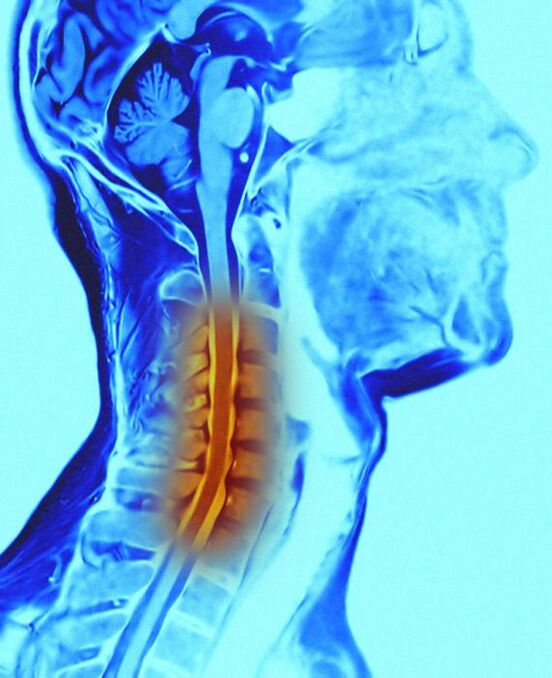
Cervical osteochondrosis is a disease of the intervertebral discs of the cervical spine.As a result, irreversible deformations of the vertebrae occur.Spinous processes appear, digging into the nerve endings that run in the trunk of the spine.In addition to this, the intervertebral discs become more fragile and thinner.There is a danger of an intervertebral hernia, which brings the patient to the operating table.
In general, the cervical spine consists of 7 vertebrae, is very mobile and is responsible for tilting and turning the head.Chondrosis of the neck is very common and ranks second after chondrosis of the lumbar spine.Most often it affects people aged 30 to 60 years.The cause of this disease is the structural features of the spine (vertebrae tightly adjacent to each other).In addition, the neck muscles are quite poorly developed, so a very insignificant load leads to disorders in the cervical spine.
Chondrosis of the neck can occur as a result of:
- weakness of the neck muscle corset;
- long periods of work at a computer or desk;
- various neck injuries;
- poor posture, sedentary lifestyle;
- metabolic disorders;
- hypothermia;
- overeating.
Symptoms of the disease
Cervical osteochondrosis, according to its symptoms, is the most dangerous type of osteochondrosis, since due to compression of blood vessels, the blood supply to the brain is disrupted.And pinching of the root extending from the spinal cord nerve can lead a person to loss of sensitivity and disability.
So, the symptoms of the disease are:
- persistent pain in the back of the head and neck;
- dizziness;
- ringing, noise in the head and ears;
- fatigue, general malaise;
- deterioration of vision and hearing;
- pain that radiates to the shoulder blade, shoulder, arm and may be accompanied by weakness and numbness of the upper extremities.
Acute course of the disease
Acute chondrosis occurs without symptoms until a certain time.It makes itself felt when the inflammatory process begins.The areas of the spine that are involved in movement are affected.Severe pain appears.
The symptoms of the acute form of osteochondrosis are the same as those of ordinary cervical chondrosis.But the causes of this disease differ:
- frequent muscle spasms;
- congenital skeletal disorder;
- postoperative actions and injuries;
- severe poisoning;
- hernias;
- old age;
- hard physical labor;
- mineral or hormonal imbalance.
Treatment
To avoid serious consequences in the future, you must urgently consult a doctor if at least one of the above symptoms of the disease occurs.Treatment of neck chondrosis should begin immediately.However, complete recovery, unfortunately, is impossible.Treatment is focused only on slowing down irreversible processes.In case of exacerbations, hospitalization and semi-bed rest are necessary.

Neurologists prescribe various types of analgesics, vitamins, and muscle relaxants.Physiotherapy (ultrasound procedures, electrophoresis using anesthetics, etc.) gives good results.Wearing a Shants collar is also one of the treatment methods.In addition, surgical intervention with the use of chondroprotectors is used.
Massage is also indicated; it should be performed when chondrosis is not yet in the acute stage.However, sometimes it is prescribed during an exacerbation period.Then the doctor reflexively affects pain in the spine at the expense of healthy areas of the body.In general, at first, massage is organized using gentle methods in order to avoid muscle tension.

In order to effectively treat cervical osteochondrosis, it is necessary:
- eliminate the factors that caused the disease;
- stimulate the process of natural regeneration of intervertebral discs;
- improve the overall condition and function of the disks;
- restore normal blood circulation to the brain.
Ointment for neck chondrosis
Using ointment helps relieve pain, warm, distract, and protect cartilage tissue.These medications should be used only as prescribed by a doctor.They are used for muscle tension and pain.The ointment comes in the following types:

- Anti-inflammatory - contains steroid substances and possibly analgesics to relieve pain.
- Providing a complex effect (pain relief, inflammation relief, regeneration).
- Ointment for chondrosis, which relieves pain and irritation.It is needed in order to increase blood supply and thereby improve tissue nutrition.The active ingredient is nicoboxyl.
- An ointment that slows down negative processes and restores cartilage tissue.The main active ingredient in it is chondroitin sulfate.
- Homeopathic.The ointment is made on the basis of plant components and extracts.In its action it is similar to the ointments from point 1.
- Massage, which relieves inflammation, promotes tissue regeneration, and relieves pain.It contains mumiyo, honey, and herbal ingredients.
Prevention
In the initial stages, chondrosis of the neck is almost invisible, so it is worth paying special attention to the prevention of this insidious disease.After all, it is always better to prevent a problem than to treat it.To prevent this disease you should:
- improve workplace conditions;
- lead a healthy lifestyle;
- follow a diet, do not overeat;
- avoid irrational loads;
- maintain correct postures while working and sleeping;
- do physical exercise.